Tuesday, April 30, 2013

FDA will investigate added caffeine in foods

WASHINGTON (AP) ? For people seeking an energy boost, companies are increasing their offerings of foods with added caffeine. A new caffeinated gum may have gone too far.

The Food and Drug Administration said Monday that it will investigate the safety of added caffeine and its effects on children and adolescents. The agency made the announcement just as Wrigley was rolling out Alert Energy Gum, a new product that includes as much caffeine as a half a cup of coffee in one piece and promises "the right energy, right now."

Michael Taylor, FDA's deputy commissioner of foods, indicated that the proliferation of new foods with caffeine added ? especially the gum, which he equates to "four cups of coffee in your pocket" ? may even prompt the FDA to look closer at the way all food ingredients are regulated.

The agency is already investigating the safety of energy drinks and energy shots, prompted by consumer reports of illness and death.

Taylor said Monday that the only time FDA explicitly approved the added use of caffeine in a food or drink was in the 1950s for colas. The current proliferation of caffeine added to foods is "beyond anything FDA envisioned," Taylor said.

"It is disturbing," Taylor told The Associated Press. "We're concerned about whether they have been adequately evaluated."

Caffeine has the regulatory classification of "generally recognized as safe," or GRAS, which means manufacturers can add it to products and then determine on their own whether the product is safe.

"This raises questions about how the GRAS concept is working and is it working adequately," Taylor said of the gum and other caffeine-added products.

As food companies have created more new ingredients to add health benefits, improve taste or help food stay fresh, there are at least 4,650 of these "generally recognized as safe" ingredients, according to the nonpartisan Pew Charitable Trusts. The bulk of them, at least 3,000, were determined GRAS by companies and trade associations.

Caffeine is not a new ingredient, but Taylor says the FDA is concerned about all of the new ways it is being delivered to consumers. He said the agency will look at the potential impact these "new and easy sources" of caffeine will have on children's health and will take action if necessary. He said that he and other FDA officials have held meetings with some of the large food companies that have ventured into caffeinated products, including Mars Inc., of which Wrigley is a subsidiary.

Wrigley and other companies adding caffeine to their products have labeled them as for adult use only. A spokeswoman for Wrigley, Denise M. Young, said the gum is for "adults who are looking for foods with caffeine for energy" and each piece contains about 40 milligrams, or the equivalent amount found in half a cup of coffee. She said the company will work with FDA.

"Millions of Americans consume caffeine responsibly and in moderation as part of their daily routines," Young said.

Food manufacturers have added caffeine to candy, nuts and other snack foods in recent years. Jelly Belly "Extreme Sport Beans," for example, have 50 mg of caffeine in each 100-calorie pack, while Arma Energy Snx markets trail mix, chips and other products that have caffeine.

Critics say it's not enough for the companies to say they are marketing the products to adults when the caffeine is added to items like candy that are attractive to children. Many of the energy foods are promoted with social media campaigns, another way they could be targeted to young people.

Major medical associations have warned that too much caffeine can be dangerous for children, who have less ability to process the stimulant than adults. The American Academy of Pediatrics says it has been linked to harmful effects on young people's developing neurologic and cardiovascular systems.

"Could caffeinated macaroni and cheese or breakfast cereal be next?" said Michael Jacobson, director of the Center for Science in the Public Interest, which asked the FDA to look into the number of foods with added caffeine last year. "One serving of any of these foods isn't likely to harm anyone. The concern is that it will be increasingly easy to consume caffeine throughout the day, sometimes unwittingly, as companies add caffeine to candies, nuts, snacks and other foods. "

Taylor said the agency would look at the added caffeine in its totality ? while one product might not cause adverse effects, the increasing number of caffeinated products on the market, including drinks, could mean more adverse health effects for children.

Last November, the FDA said it had received 92 reports over four years that cited illnesses, hospitalizations and deaths after consumption of an energy shot marketed as 5-Hour Energy. The FDA said it had also received reports that cited the highly caffeinated Monster Energy Drink in several deaths.

Agency officials said then that the reports to the FDA from consumers, doctors and others don't necessarily prove that the drinks caused the deaths or injuries but said they were investigating each one. In February, FDA Commissioner Margaret Hamburg again stressed that reports to the agency of adverse events related to energy drinks did not necessarily suggest a causal effect.

FDA officials said they would take action if they could link the deaths to consumption of the energy drinks, including forcing the companies to take the products off the market.

In 2010, the agency forced manufacturers of alcoholic caffeinated beverages to cease production of those drinks. The agency said the combination of caffeine and alcohol could lead to a "wide-awake drunk" and has led to alcohol poisoning, car accidents and assaults.

Source: http://news.yahoo.com/fda-investigate-added-caffeine-foods-205546269.html

king cake fun. hepatitis c symptoms david bradley david foster wallace pinterest attwireless

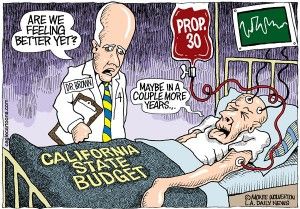
As we predicted, pensions eating up Prop. 30 education funds ...

Prop. 30 not enough, Dec. 3, 2012April 30, 2013

By John Seiler

As Bill Clinton might put it, it?s in the math.

In the lead up to the November 6 election last fall, CalWatchDog.com ran several articles on Proposition 30 and pensions. We warned that?the $7 billion tax increase would go not to schools, as advertised by Gov. Jerry Brown and others in TV ads, but to teacher pensions and other spending. I?ll quote some below.

The news now is that this is exactly what is happening. David Crane, a Democrat who was a budget adviser to Republican Gov. Arnold Schwarzenegger, has the facts in a Bloomberg article:

?Most Californians would be surprised to learn that 100 percent of education?s share of the tax increase proposed by Governor?Jerry Brown?will go to pensions instead of classrooms. But that would be no surprise to longtime observers of the?California?State Teachers? Retirement System, which administers teacher pensions.

?Here?s why: After retirement, teachers are unconditionally guaranteed lifetime pensions by their school districts. Everything works out fine if?Calstrs, as the retirement system is known, earns the investment returns it forecasts and from which upfront contributions are derived.

?But if they fall short, school districts must make up the difference. Because of compounding, the failure to earn forecasted earnings translates into huge deficiencies down the road.

?Unfortunately, ?down the road? is where school districts are now.

He noted something Katy Grimes?reported here in March on a Legislative Analyst Report, which found that the California State Teachers Retirement System needs $4.5 billion a year in new funding to keep afloat. Prop. 30 now is pected to bring in $7 billion in new revenues. Crane noted that, because of Proposition 98, about 40 percent of any new revenue must go to schools. He wrote, ?[T]hat means?almost $3 billion a year for the schools to use for pensions, or two-thirds of the Calstrs $4.5 billion request. A good start to meeting pension costs, but none of the tax increase will benefit students.?

So the pensions will eat up all the $3 billion from Prop. 30 going to ?schools? ? plus another $1.5 billion from other general-fund dollars.

How did CalSTRS get in the mess? Crane explained:

?In short, it failed to take?Warren Buffett?s advice. In 1999, Buffett said that long-term investors, such as pension funds, should assume investment returns of roughly 6 percent a year, not far from the actual return earned since then. Had Calstrs used his figure for its projections of the fund?s growth, it would have required larger contributions from school districts, employees and the state, and Calstrs would be healthier now.

?But the retirement fund?s board ? made up of the state?s chief financial officials and others ? chose to forecast much higher investment returns that, as Buffett later pointed out, implicitly predicted the stock market portion of the Calstrs portfolio to perform 10 times better than stocks did in the 20th century.?

CalWatchDog.com predicted the Prop. 30 legerdemain

All of this was known to readers of CalWatchDog.com before the election because we reported on it.

I wrote on Sept. 12?in an article?titled, ?California Budget Project analysis of Prop. 30 slights slam to business, jobs?:

?Being pushed by Gov. Jerry Brown and the state?s powerful government-worker unions, Prop. 30 would increase sales and income taxes taxes by from $6 billion to $8.5 billion a year. Supposedly the money would preclude cuts in K-12 and college education. But there?s no guarantee the higher taxes wouldn?t go toward the state?s burgeoning pension costs for retired government workers. All government money is fungible.?

I ?also wrote on Oct. 27?in an article titled, ?Yes, Prop. 30 would fund pensions?:

?If Proposition 30 passes, the $6 billion it would soak from taxpayers would just go straight to public-employee pensions?.

?In sum, the $6 billion from Prop. 30 would go to pay $6.4 billion in state pension payments.

?Everything else is a deception.?

On Oct. 31, Steven Greenhut wrote?in an article titled, ?Pay soars in the public sector?:

?Californians are stuck watching those dreadful union-financed campaign TV ads supporting?Proposition 30, which would push our highest income-tax rates to the stratosphere and boost sales taxes. The main rationale for high taxes, we?re told, is that California is slashing public school funding and laying off teachers?.

?What will happen if California voters approve Prop. 30? Check out the many bills that moved through the Legislature this session, as legislators crafted new proposed programs and benefit increases for their public-employee constituents.?

On Nov. 2, Wayne Lusvardi wrote in an article titled, ?Prop. 30 would make budget roller coaster more scary?:

?Declaring that K-12 public school budgets would have to be cut [unless Prop. 30 passed] is the way the state socially constructs and manages a budget crisis.? It is never portrayed that it is the Medi-Cal or public pension funds that are running a deficit. Public school children are used as poster children every year for any revenue shortfalls in health and welfare programs, pensions, or bond debts?.

?In the above table [in the Lusvardi article], it appears that the hole in the state budget is in the Bond Fund. This would include the liability for public pensions. Retirement benefit costs have increased from $1.4 billion in 1999 to?$6.5 billion?this fiscal year.?

For reference, here?s one of the misleading TV ads the Prop. 30 campaign ran:

Tags: David Crane, Jerry Brown, John Seiler, Prop. 30, tax increase

Source: http://www.calwatchdog.com/2013/04/29/pensions/

prometheus trailer patrice oneal shamrock slainte the quiet man yellow cab dropkick murphys

Teachers, Holocaust survivor give lessons of tolerance to Texas students

La Vernia -

La Vernia Junior High 8th graders joined forces with Navarro Intermediate School 5th graders Monday night to share what they?re learning.

But this was no science fair or school play. Instead, it was a lesson in tolerance.

?I tell them every day to find something today to change to make tomorrow better," said Navarro 5th grade teacher, Lisa Barry.

Barry has been sharing that with students for years after deciding to teach her class to accept each others differences by teaching the story of the Holocaust- particularly, children of the Holocaust. ?Kids connect with kids,? she said.

Barry was determined to teach tolerance after experiencing the loss of a classmate who took his own life due to bullying when she was in high school.

But then Barry?s lessons became bigger than just her classroom when 8th grade La Vernia teacher Jennifer Cooper heard about it.

Cooper?s own children go to school with Barry?s children.

Coopers changed up the curriculum to meet 8th grade standards and says she?s already seen a change in her students.

"I?ve seen apologies in the classroom where they?re apologizing to each other. Kids that never speak have spoken,? Cooper said.

That?s an impact students have seen for themselves.

?They used to be very rude and mean and bully a lot of kids, and now they are way better," said 5th grader Micayla Haws of her classmates.

?People have really had their eyes opened that not everybody is like them and we have to learn to accept that because that?s just how we were made,? said 8th grader Danielle Maldonado.

On Monday night, the community gathered at La Vernia ISD?s Auditorium to hear the story of Inge Auebacher, a Holocaust survivor.

Barry?s students discovered Auebacher was a survivor after researching her in class.

She says her students were determined to find Auebacher and ask her to come speak to them. That first year, they raised the money for her trip. Every year since, her visit has been funded through a school grant.

Auebacher?s speech Monday was not just a lesson in history, but motivation for the future.

?If I can drop a pebble in the water, and each of those kids are doing that, maybe I can save somebody who might have to go through that sometime in their life,? said Barry.

As a continuation of this lesson, Barry?s class began collecting pennies in 2007 in a program called Pennies for the Persecuted.

Their goal when they set out was to collect 6 million pennies in honor of the millions of people killed during the Holocaust.

Cooper?s class is now part of effort.

So far, students have raised nearly 2 million pennies and counting. While the money has been donated to several charitable organizations, the majority goes to the Children?s Advocacy Center of Guadalupe County.

For a list of recent stories Myra Arthur has done, click here.

Source: http://www.ksat.com/news/teachers-lesson-sparks-action-community-gathering/-/478452/19946964/-/ssgos8/-/index.html

Kerri Strug Ledecky Nadia Comaneci Rebecca Soni Snoop Lion London 2012 Table Tennis badminton

From the mail bag: Why does my 16GB Galaxy S4 only have 8.8GB of space?

Galaxy S4

More features mean more spaced used for their files, and the Galaxy S4 takes about twice the storage space as the previous model

Morris writes in, 

I just got myself a Samsung Galaxy S4 (16GB). Upon further storage checking, I noticed the Total Space is only 8.82GB. I am confused. How much memory space actually does Jelly Bean 4.2.2 take?

There sure has been a lot of discussion about the remaining storage on the Galaxy S4's 16GB "disk" after the factory software is accounted for. We're used to seeing a bit of discrepancy between what is advertised and what's really available, but this go 'round the difference is huge and has quite a few people a bit concerned. Morris gets to the root of the issue with his question, once you have a look at what's going on.

The Samsung Galaxy S4's system folder, the one where all the magic happens and the factory installed "stuff" resides takes over 2GB of space (2,235,535,360 bytes for those that like numbers). Compared to the Jelly Bean system files on the Galaxy S3 at 1.1GB, and the Nexus 4 at 495MB, that's quite a bit of difference. By the time you take the rest of the OS into account, and partition space reserved for things like the system cache, that leaves you with about half the advertised space left to use for your own stuff.

We're not going to knock on Samsung for using so much space for the operating system. When you want features included as part of the OS, you need to have the files somewhere. Samsung brings features to the Galaxy S4 that you won't find anywhere else, and the cost of those features is reduced storage left for the user. You also won't find these features on Google Play, so this is the trade-off you have to make. 

Also, there's the SD card slot to remember here as well. While this won't help you when you run out of space to install applications, you can store all your multimedia and documents there. 13MP panorama pictures and 1080p video can take a lot of room, so storing your camera shots on the SD card is a good idea. 

Right now, nobody seems to be selling the 32 or 64GB versions of the Galaxy S4. We're not sure if Samsung is at fault here, or the carriers around the world, but no matter who we point a finger at they just aren't available. In the meantime, 8.8GB is enough for some folks, and for some it's not. Until we start to see the models with more storage become available, this is how it is.

We can't tell you that this does or doesn't matter to you, you'll have to decide that one for yourself. 


Source: http://feedproxy.google.com/~r/androidcentral/~3/TuVnRBVerQk/story01.htm

gcb patricia heaton arsenic and old lace dionne warwick leslie varez ward solar storms

Pssst! Inside Kate Middleton's Baby Shower - MyDaily

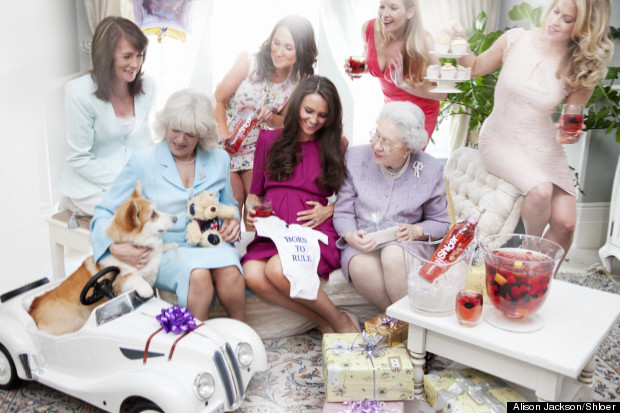
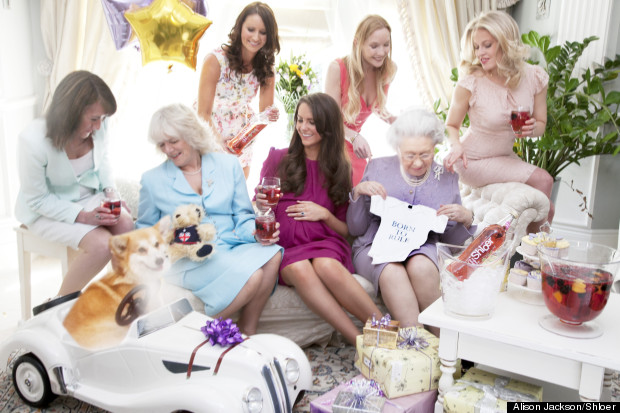
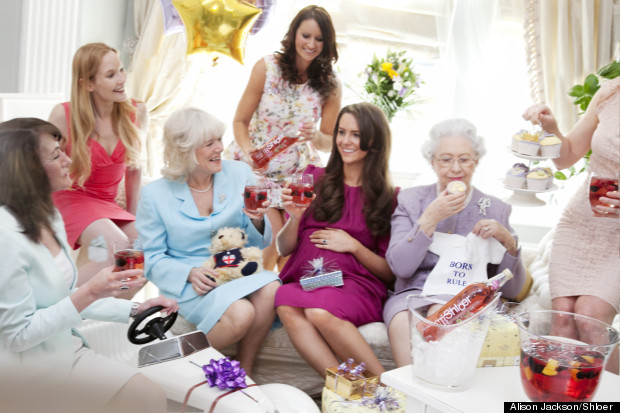
Squint and you might just believe this. Photographer and/or artist Alison Jackson has set the scene for how she imagines the Duchess of Cambridge's royal baby shower...

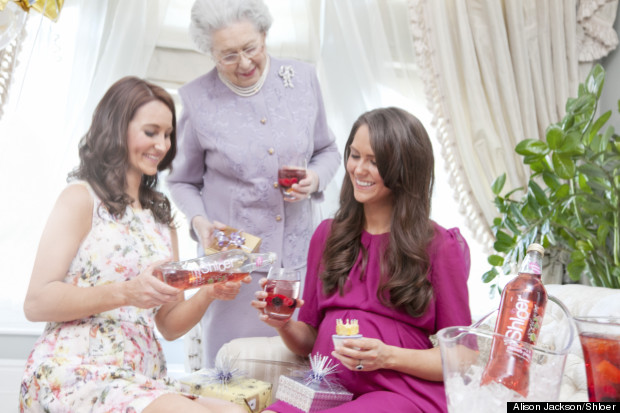
Naturally, the whole crew aka Pippa Middleton, the Queen, Camilla and Kate's mum (er, and a corgi) are all in attendance to raise a glass to the little bun in the oven.

alison jackson baby shower royal family shloer

kate middleton

If this isn't exactly how the ACTUAL baby shower goes down then we'll eat our hat...

kate middleton

kate middleton

If that tickled your funny bone, check out some more ha-ha-he-he pics of K-Middy here...

Source: http://www.mydaily.co.uk/2013/04/29/kate-middletons-baby-shower-alison-jackson-photography_n_3177615.html

ied breaking news new york post Texas Bombing Sean Collier Kyrgyzstan Suspects in Boston Bombing

Sunday, April 7, 2013

India set to have first Defence University

India set to have first Defence University

New Delhi : India will soon have an university exclusively for defence studies for the first time. The country has notable defence institutions like the National Defence Academy at Kadakwasla and National Defence College at New Delhi where foreign students are alumnis, but an university exclusively for defence studies is needed to fill in the gap.

The decision for setting up of the Indian National Defence University (INDU) was finally approved at a meeting presided over by the Defence Minister AK Antony here on Friday.

Accordingly, the Prime Minister, Dr Manmohan Singh is slated to lay the foundation stone for the university campus and building in the last week of May, this year.

INDU will be a fully autonomous institution and will be located on over 200 acres of land at Binola near Gurgoan in Haryana. The university will have a mandate to provide knowledge based higher education for management of defence of the country keeping its participants abreast of emerging security challenges through scholarly research and training.?

The site, Binola has been chosen due to its proximity to the availability of land near the national capital New Delhi. It would be easier for international guests and students as well as country?s security personnels, civilian and defence officials to visit the main campus at Binola for courses and training.

The Education Consultants of India Ltd (EdCIL), which is a public sector enterprise set up by the Union Ministry of Human Resource Development, has been appointed by Ministry of Defence as consultant for formulation of detailed project report (DPR), layout plan and for drafting the provisions of the INDU Bill to be tabled in Parliament and subsequently the statutes.?

The University will be headed by its President, who would be a three star serving General or an equivalent officer with C-in-C status on appointment.? The Vice-President will be a civilian. About 66% of students would be from the Armed Forces, whereas 33% of students would be drawn from other relevant government agencies, police and civilian.? The teaching faculty will comprise both military personnel and civilians in the ratio of 1:1.? The University is being planned on the model of the existing high-profile Indian Institutes of Technology (IITs) and Indian Institutes of Management (IIMs).???

The idea of a National Defence University was first mooted in 1967.? This was followed by the recommendations of the Sethna Committee in 1980, Kargil Review Committee in 1999, Group of Ministers and Committee on National Defence University in 2001.???

This long awaited University will be instituted by an Act of Parliament with President of India as the Visitor and Defence Minister as the Chancellor.? It will be governed by its own norms and will inculcate and promote coordination and interaction between Armed Forces and relevant civilian institutions and establishments in the country.?? It will focus on higher education in defence studies, defence management and defence science and technology.? The University will offer post graduate studies and doctoral and post-doctoral research.?

The Union Minister of State for Defence Jitendra Singh, Chairman Chiefs of Staff Committee (COSC)? and the? Chief of the Air Staff Air Chief Marshal NAK Browne,? Chief of the Army Staff General Bikram Singh, Defence Secretary Shashi Kant Sharma, Deputy Chief of Naval Staff Vice Admiral PK Chatterjee and Additional Secretary Anuj Kumar Bishnoi attended the Friday?s meeting presided over by the Defence Ministry AK Antony which finally approved the decision.

Source: http://www.mynews.in/News/india_set_to_have_first_defence_university_N547243.html

Gigi Chao Jimmy Hoffa Ed Hochuli Opie modern family george strait how i met your mother

Just 88,000 U.S. jobs added in March

WASHINGTON (AP) ? U.S. employers added just 88,000 jobs in March, the fewest in nine months and a sharp retreat after a period of strong hiring. The slowdown may signal that the economy is heading into a weak spring.

The Labor Department said Friday that the unemployment rate dipped to 7.6 percent, the lowest in four years, from 7.7 percent. But the rate fell only because more people stopped looking for work. People who are out of work are no longer counted as unemployed once they stop looking for a job.

The percentage of working-age adults Americans with a job or looking for one fell to 63.3 percent in March, the lowest such figure in nearly 34 years.

Stocks plummeted after the report but narrowed their losses later in the day. The Dow Jones industrial average was down about 76 points in midafternoon trading. Broader indexes also declined.

March's job gain was less than half the average of 196,000 jobs in the previous six months. The government said hiring was even stronger in January and February than previously estimated. January job growth was revised up from 119,000 to 148,000. February was revised from 236,000 to 268,000.

Several industries cut back sharply on hiring. Retailers cut 24,000 jobs in March after averaging 32,000 in the previous three months. Manufacturers cut 3,000 jobs after adding 19,000 in February. Financial services shed 2,000.

Some economists said retailers might have held back on hiring because March was colder than normal. That likely meant that Americans bought fewer spring clothes and less garden equipment. Clothing stores shed 15,000 jobs, and building material and garden supply stores shed 10,000.

In March, average hourly pay rose a penny, the smallest gain in five months. Average pay is just 1.8 percent higher than a year earlier, trailing the pace of inflation, which rose 2 percent in the past 12 months.

"This is not a good report through and through," Dan Greenhaus, chief economic strategist at brokerage firm BTIG, said in a note to clients.

The Labor Department uses a survey of mostly large businesses and government agencies to determine how many jobs are added or lost each month. That's the survey that produced the gain of 88,000 jobs for March.

The government uses a separate survey of households to calculate the unemployment rate. This survey found that the number of people either working or looking for work fell by nearly 500,000. It was the sharpest such drop since December 2010. And the number of Americans who said they were employed dropped nearly 210,000.

The percentage of working-age adults in the labor force is a figure that economists call the participation rate. At 63.3 percent, it's the lowest since 1979. Normally during an economic recovery, an expanding economy lures job seekers back into the labor market. This time, many have stayed on the sidelines, and more have joined them.

Longer-term trends have helped keep the participation rate down. The vast generation of baby boomers has begun to retire. The share of men 20 and older in the labor force has dropped as manufacturing has shrunk.

Some who have left the job market are getting by on government aid, particularly Social Security's program for the disabled. The share of women working or looking for work has plateaued, and fewer teenagers are working.

Heidi Shierholz, says the labor force participation among those ages 25 to 54 ? "prime age" workers ? has dropped to 81.1 percent. It hasn't been lower since 1984.

This could be the fourth straight year that the economy and hiring have shown strength in the winter and early spring, only to weaken afterward. Last year, for example, job gains averaged 262,000 a month in the January-March quarter, but then fell to a pace of 108,000 in the April-June quarter.

Economists blame a range of factors for the trend. Europe's financial crisis intensified in 2010 and 2011. And Japan's earthquake and tsunami disrupted U.S. manufacturing in 2011. The government's seasonal adjustment process may also be exaggerating the winter gains and depressing the summer figures.

Some economists said they expect any weakening this spring to be milder than in the past three years.

"We don't anticipate the slowdown becoming too severe, not when the housing recovery is firing on all cylinders, but it is a reminder that the U.S. is still unable to sustain what used to be just average rates of growth," said Paul Ashworth, an economist at Capital Economics.

Gary Burtless, senior fellow in economic studies at the Brookings Institution, notes that some Americans have likely stopped looking for work because their unemployment benefits have run out. People must be looking for a job to qualify for unemployment benefits.

"If people aren't collecting benefits, they have one less reason to be out pounding the pavement looking for a job," Burtless says.

Sluggish hiring could embolden the Federal Reserve to keep borrowing costs low for the long run. The Fed has said it plans to keep short-term interest rates at record lows at least until unemployment falls to 6.5 percent ? and Chairman Ben Bernanke has said a 6.5 percent rate is a threshold, not a "trigger," for any rate increase. The Fed wants to see sustained improvement in the job market.

Most analysts think the economy strengthened from January through March, helped by the pickup in hiring, a sustained recovery in housing and steady consumer spending. Consumers stepped up purchases in January and February, even after Social Security taxes increased this year.

Still, the higher taxes have reduced paychecks. And many economists say steep government spending cuts that began taking effect March 1 could slow growth in the spring and summer.

Some small businesses say they've grown more cautious about hiring. The government spending cuts could cut into sales at companies with federal contracts and at small retailers located near government facilities. And small business owners worry about increased health insurance costs next year, when the government's health care overhaul is fully implemented.

A survey released Wednesday by the National Federation of Independent Business showed that fewer small businesses plan to hire.

Some smaller employers are also wary about hiring before an expected fight over an increase in the federal minimum wage. President Barack Obama has proposed raising the minimum wage to $9 an hour from $7.25.

As federal agencies and contractors cut back in coming months, Nariman Behravesh, chief economist at IHS Global Insight, expects jobs growth to average 100,000 to 150,000 a month, down from an average 212,000 from December through February.

"The good news is that this is happening at a time when the private economy is gaining momentum," Behravesh said. He expects hiring to pick up after mid-year.

Craig Alexander, chief economist with TD Bank Financial Group, said the economy isn't growing fast enough to generate many jobs. He expects the economy to grow around 2 percent this year, a sluggish pace. He thinks it would be growing faster, perhaps at a 3 percent annual rate, if not for the Social Security tax increase and the federal budget cuts.

"Fiscal austerity is having an impact," Alexander said.

Source: http://news.yahoo.com/us-adds-just-88k-jobs-rate-drops-7-161233737--finance.html

PacSun apple store bestbuy bestbuy gamestop black friday deals Sephora

Japan To Set Up Top-Level Task Force To Bolster Farm Industry

Wednesday, April 3, 2013

TOKYO (Kyodo)--The government plans to set up a top-level task force to strengthen the agriculture sector, which is feared to suffer heavy blows when Japan joins the Trans-Pacific Partnership free trade framework, government and ruling party sources said Tuesday.
read full article...

This article is available to Nikkei.com subscribers only.
Please log in to read the entire article, or learn about Nikkei.com subscription offers below.

Nikkei.com is the English-language online flagship of Japan?s leading business news publisher, Nikkei Inc.
Harnessing the editorial power of Nikkei Inc., Nikkei.com offers unsurpassed access to the latest business intelligence and market data from Japan.
No matter what your business is in Japan, Nikkei.com is an indispensable resource.

Join now to get round-the-clock business new, market data and stock quotes from Japan, fresh from the newsroom to your desktop!

Subscription Fees :

9,450 yen for 6 months or 16,800 yen for one year
(*We will deduct 5% consumption tax on prices above if you reside outside of Japan) Learn more about Nikkei.com and our subscription options.

Source: http://e.nikkei.com/e/app/fr/gateway/rss_news.aspx?URL=/e/ac/tnks/Nni20130403D03JF165.htm

xbox live update joan rivers gary carter dies oolong tea survivor one world lil kim progeria

Thursday, April 4, 2013

Nokia Music for WP8 now keeps track of listening history, adds Live Tile feature

Nokia Music for WP8 now keeps track of listening history, adds Live Tile feature

Human beings living their mobile life under Microsoft's OS have been enjoying the Nokia Music service for awhile now, but for the Windows Phone 8 folk in particular, the groovy app just got a little better. Earlier today, Nokia released an updated version of its jam-packed application, giving users, among other things, a Live Tile option that displays various info about the music currently being played -- you know, simple (but useful) stuff like artist and song names. What's more, Nokia Music now also boasts a history feature which takes virtual note of the most recently played tracks, as well as bringing improvements to the download section of the app's mix radio stations. If all that jazz sounds great to you, dear reader, then pay the source link below a quick visit, where you'll easily find a direct download of the goods.

Filed under: , , , , ,

Comments

Source: Windows Phone

Source: http://www.engadget.com/2013/04/03/nokia-music-windows-phone-update/

mary poppins john derbyshire kinkade thomas kinkade paintings navy jet crash virginia beach isiah thomas easter recipes

In Colorado, President Obama Presses Congress to Act on Gun-Control Measures

DENVER - Ramping up pressure on lawmakers to reform the nation's gun laws, President Obama today made an appeal to common sense.

"There are good people on both sides of this thing, but we have to be able to put ourselves in the other person's shoes," the president said during a visit to Colorado, the state that has suffered two of the nation's worst mass shootings.

"Part of the reason it's so hard to get this done is because both sides of the debate sometimes don't listen to each other," he said. "The people who take absolute positions on these issues on both sides sometimes aren't willing to concede even an inch of ground."

As the Senate prepares to debate gun legislation next week, the president insisted there is "no conflict" between respecting the rights of gun owners and enacting reforms.

"There doesn't have to be a conflict between protecting our citizens and protecting our Second Amendment rights," he told law enforcement officials, advocates and victims' families at the Denver Police Academy.

Speaking just four miles from the site of last year's mass shooting in Aurora, Colo., Obama lauded this purple state as a model for what's possible nationwide. Colorado has expanded background checks and restricted high-capacity magazine clips, despite the state's strong hunting tradition.

"Colorado has shown that practical progress is possible," Obama said.

The president's speech today was part of his broader push to maintain political momentum in the wake of the massacre at Sandy Hook Elementary School.

Obama is urging lawmakers to act on a set of "common-sense" proposals, including universal background checks for gun buyers. He is also calling on Congress, at the very least, to vote on an assault weapons ban and limits on high-capacity magazines.

"We knew from the beginning that change wouldn't be easy, and we know that there would be powerful voices that would do everything they could to run out the clock, change the subject, ignore the majority of the American people. We knew they'd try to make any progress collapse under the weight of fear and frustration, or maybe people would just stop paying attention," he said. "The only way this time will be different is if the American people demand that this time it must be different, that this time we must do something to protect our communities and our kids."

Also Read

Source: http://news.yahoo.com/colorado-president-obama-presses-congress-act-gun-control-012408910--abc-news-politics.html

cbs news Jenni Rivera Adam Lanza Facebook the hobbit mick jagger Newton Shooting Newtown Shooting

Penguins captain Sidney Crosby out of hospital

(AP) ? Pittsburgh Penguins captain Sidney Crosby is out of the hospital after breaking his jaw Saturday.

The Penguins confirmed on their Twitter account Tuesday that Crosby had been released a day earlier. He will be out of the lineup indefinitely after undergoing surgery.

Crosby was hurt in the first period of the Penguins' 2-0 win over the New York Islanders when he was struck in the mouth by a puck from a deflected shot.

The Eastern Conference-leading Penguins, with 15 straight wins, play their first game without Crosby on Tuesday night at home against Buffalo.

Associated Press

Source: http://hosted2.ap.org/APDEFAULT/347875155d53465d95cec892aeb06419/Article_2013-04-02-HKN-Penguins-Crosby/id-b8fb8b4291e84421aa9d9e73374870d6

best superbowl commercials 2012 best super bowl ads chrysler super bowl commercial madonna half time show fiat 500 abarth madonna halftime m i a